K-pop demon hunter and inclusive language
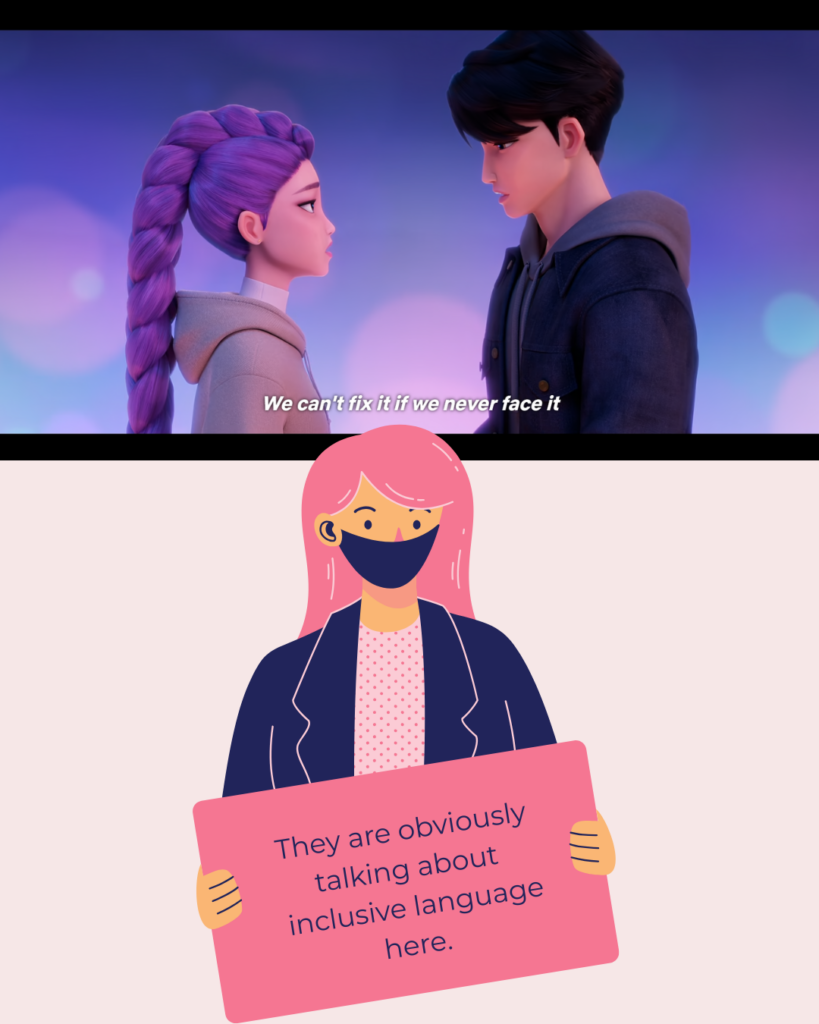
👀 Have you watched K-pop demon hunters yet?
Well I have, and it made me think about inclusive language.
In one of the songs, Rumi and Jinu say “We can’t fix it if we never face it” and it’s the same for discrimination in language.
Bear with me.
Studies have shown that language shapes the way we see the world. And more than that, it can change the way we build it.
But to use language as a tool for justice, we first need to look it in the eye:
🔍 What stereotypes are we unknowingly reinforcing?
🔍 What systems are we upholding through the words we use?
🔍 Whose experiences are being erased, and whose realities are being centered?
For example:
👉 Talking about “beneficiaries” instead of “collaborators” in social justice work reinforces a power imbalance in your relationship to the people you serve.
👉 Using language traditionally often defaults to cis, white, able-bodied men unless we actively counter that bias.
👉 Racist, sexist, ableist, or colonial expressions still pop up in everyday conversation.
Language isn’t just about grammar. It’s about justice. It’s about visibility. It’s about naming people, recognising them, respecting them.
We can’t change the world with inclusive language alone.
But we also can’t change the world without it.
So let’s face it, so we can fix it. 😉
—
👋 Hi! I’m Inès, I create and translate texts that change the world in English, Spanish and French.
✊ I write about inclusion, language and social justice. Follow me!
✉ You want your French communication to be inclusive? Send me a message!